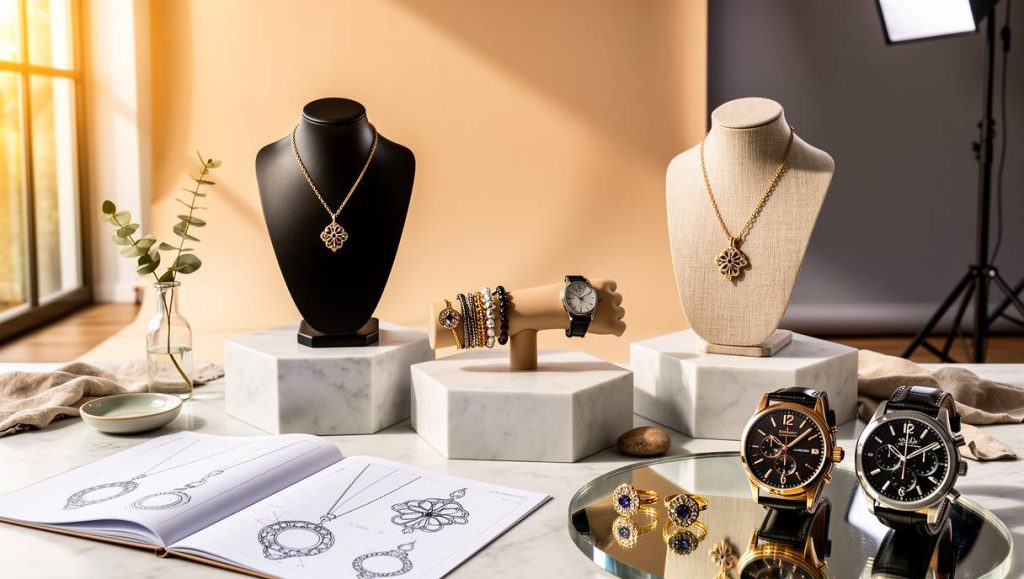

Beautifully made objects deserve equally beautiful images. For independent makers and small luxury labels, product photography is more than documentation—it’s the bridge between the tactile world of the studio and the fast-moving, scroll-first world of e-commerce and social media. When customers can’t hold, weigh, or try your work, high-quality visuals must convey texture, scale, craftsmanship, and story in a heartbeat. Whether the focus is jewellery, watches, accessories, ceramics, textiles, or woodwork, the right imagery elevates perceived value, reduces returns, and fuels conversions across marketplaces, web shops, and print. Modern tools—including AI-powered studios and drag‑and‑drop visual editors—now make it faster and more affordable to achieve polished, launch-ready results without the logistics of traditional photoshoots.
For artisans, the goal is twofold: faithfully represent materials and finish while building a cohesive brand language. That means balancing technical precision—true color, sharp detail, clean reflections—with creative direction—styling, atmosphere, and lifestyle context. With the right workflow and gear, even a small workspace can produce images that rival a large studio. And with scalable digital production, collections can be photographed, iterated, and published at the speed of your creative process.
Crafting Visual Stories: Foundations of Artisan Product Photography
Every frame should tell a story about how an object feels, who it’s for, and what sets it apart. Begin with brand clarity: define a visual palette that aligns with your materials and audience. Fine jewellery often sings on soft neutrals with gentle gradients; hand-thrown ceramics benefit from textured surfaces and natural light; leather goods pair well with warm tones and tactile backdrops. Establish a style guide covering background color, lighting mood, camera height, and framing, then hold that line. Consistency across your catalog is a trust signal and makes your shop grid look intentionally designed.
Light is the hero. For metals and gemstones, use broad, diffused light to tame harsh specular highlights. A light tent or scrim evens reflections on polished surfaces, while white cards sculpt pleasing catchlights. Consider a circular polarizing filter to reduce glare on glazed ceramics or watch crystals. For textiles, raking light enhances weave and drape; for wood, side lighting reveals grain while a small fill card maintains shadow detail. Aim for soft, controllable illumination rather than blasting power—you want shape, not scorch.
Color accuracy builds credibility. Calibrate your monitor, set a custom white balance with a gray card, and shoot a color checker for reference if your work depends on nuanced hues (sapphires, patinas, hand‑mixed glazes). Save a repeatable RAW development preset that preserves true materials while retaining a natural look. Shoppers notice when rose gold shifts to copper or cobalt glaze leans purple. A faithful baseline is vital, even if lifestyle images later explore creative color grading.
Think in angles and scale. A primary “hero” angle anchors each listing, ideally straight-on or three-quarter with a slight top-down bias for dimensionality. Secondary angles should reveal functional details: clasp mechanisms, stitching, foot rings, under gallery of a ring, or lug design on a watch. Include at least one scale reference—on‑model, a hand in frame, or a consistent prop like a 1 cm grid or coin (used tastefully). For marketplaces that permit video, a six‑second turntable clip or gentle handheld parallax shows form better than any single still.
Finally, prepare for output. Capture at high resolution so you can deliver crisp 2K e‑commerce images and 4K hero banners without re-shoots. Retain ample margin for square, 4:5, and 16:9 crops to satisfy site banners, product tiles, and social placements. With a solid technical foundation in lighting, color, and composition, you’re free to build emotion on top.
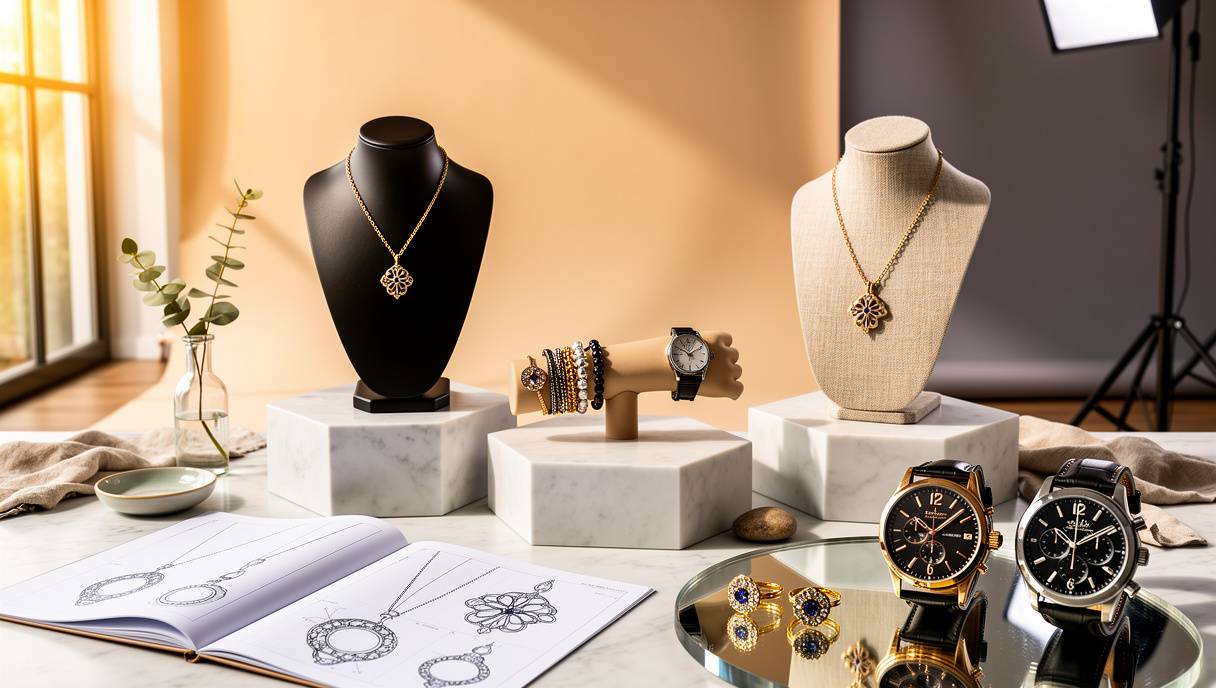
From Bench to Browser: Workflow, Tools, and Styling for High-Impact Images
A streamlined workflow helps artisans move seamlessly from creation to conversion. Start with preparation: polish metal, steam-clean gemstones, depill textiles, dust ceramics, and condition leather. Small imperfections become monumental at macro magnification. Assemble a minimal kit—microfiber cloths, compressed air, tweezers, museum wax for stabilizing upright pieces, and lint rollers. This simple ritual saves hours in retouching.
Decide on the image mix. Packshots on clean backgrounds drive clarity, speed load times, and are often required by marketplaces. Lifestyle images add context—earrings on a linen tray by a sunlit window, a stoneware mug with a book and loose tea, a watch beside drafting tools to echo precision. On‑model imagery communicates scale and wearability, essential for rings, bracelets, scarves, and bags. If live talent or travel strains the budget, consider virtual solutions that place your piece on a model or in a styled set with photoreal lighting and shadows, maintaining your brand’s aesthetic without staging a full shoot.
Styling should support, not steal. Limit props to two or three elements with complementary textures and colors. Avoid reflective clutter around high-polish items. For watches and jewellery, hands and wrists should be naturally posed and moisturized without shine; for ceramics and wood, show the base and underside to prove craftsmanship. When appropriate, add a subtle narrative—folded tissue, a maker’s stamp, a bench tool—signals authenticity without crowding the frame.
Modern content demands volume and agility, especially across Etsy, Shopify, Instagram, and print. This is where smart, AI-driven visual production saves time: transform sketches or CAD models into realistic previews to validate designs or pre-sell; generate background variations that match a seasonal theme; create on‑model angles at multiple sizes for fit visualization; and output consistent 2K and 4K imagery from a single setup. Platforms built for jewellery, watches, accessories, and other high‑finish goods make it easier to match studio lighting, preserve metal tones, and keep gemstone fire believable. Explore options like Product photography for artisans to accelerate production while keeping full creative control.
Wrap the process with quality control. Zoom to 200% to check edges, dust, and stray hairs. Keep retouching realistic: remove dust and scratches that aren’t intrinsic to the item, but don’t over-smooth textures that define the craft. Name files intelligibly with SKU and angle, and add alt text that describes material, color, and use (for accessibility and SEO). Export web-optimized JPG or WEBP for speed, TIFF for print, and keep a library of reusable lighting templates so every new collection can be shot—or generated—on brand in minutes.
Real-World Scenarios and Case Notes for Jewellery, Ceramics, Textiles, and Woodwork
Consider a goldsmith launching a micro‑collection of faceted gemstone rings. The challenge: gemstone color must stay true while metal remains mirror-like yet not blown out. Build a set with two large diffusers forming a soft V, and use white bounce cards to create clean edge reflections. A small black card out of frame introduces a controlled dark line that adds contour to polished shanks. Capture a hero packshot on light gray to prevent gold from skewing too warm, then produce lifestyle frames on a linen surface with soft morning light. Macro shots of the under‑gallery show craftsmanship and justify price. If on‑model shoots are impractical, create photoreal hand models with varied skin tones to demonstrate scale inclusively, ensuring a realistic finger compression for authenticity.
For a watchmaker with brushed cases and sapphire crystals, glare management is paramount. Angle the watch so the dial sits slightly below the camera axis, minimizing face reflections, and use cross-polarization (polarizer on lights and lens) to control glass flare while preserving the sunburst dial texture. A consistent 10:10 hand position frames branding without hiding subdials. Produce a white-background packshot set for e-commerce, a moody steel-and-leather lifestyle series to convey precision, and a short 360 turn for marketplaces that support spins. An AI-powered studio can quickly duplicate the set across dial colors and strap options, giving a complete collection view without re‑rigging lights.
A ceramicist selling matte and gloss tableware needs to communicate form and finish. Side lighting at a low angle carves subtle curves on bowls, while a top fill preserves rim detail. For glossy glazes, use a large overhead diffuser for broad, elegant highlights that follow the form. Include a scale reference—a hand lifting a cup or a teaspoon beside a ramekin—so buyers understand capacity. Lifestyle scenes with simple linens and herbs underscore everyday usability. When new glaze colors are proposed, produce concept visuals from digital swatches to test market response on social media before firing an entire batch.
Textile artisans face different hurdles: fibers must look touchable, not crunchy. Use big, soft light and avoid excessive clarity in post. To show drape, let scarves and garments fall naturally over a radius form; to reveal weave, include one close-up with side light. On‑model images clarify length and fit, yet can be expensive. Virtual on‑model imagery with accurate cloth simulation helps visualize scale on different body types and skin tones, supporting inclusive merchandising without the logistics of a full-day shoot. Keep color management tight so dyed fabrics translate accurately across devices.
Woodworkers selling boards, furniture accents, or utensils must celebrate grain and craftsmanship. Shoot at a slight angle with side light to pull depth from the surface; a white card opposite the key softens shadows in handles and joints. Oil-treated woods can shine unpredictably—feather highlights and dial back specular contrast to maintain warmth. Include a bottom view to show joinery and maker’s mark. In context, pair products with natural ingredients—citrus, herbs, grains—but keep props minimal so the eye returns to the wood. For custom commissions, render size variations and finishes on consistent backdrops so clients can visualize options before you mill the first plank.
Across all disciplines, the same principles apply: clarity for e-commerce, emotion for lifestyle, and authentic detail to honor the craft. A repeatable setup—whether physical lights and surfaces or a virtual, drag‑and‑drop studio—lets artisans produce cohesive sets for every launch, market, and season. With careful lighting, intentional styling, and smart production tools, handmade work travels from bench to browser without losing what makes it special: material honesty, precision, and soul.

Osaka quantum-physics postdoc now freelancing from Lisbon’s azulejo-lined alleys. Kaito unpacks quantum sensing gadgets, fado lyric meanings, and Japanese streetwear economics. He breakdances at sunrise on Praça do Comércio and road-tests productivity apps without mercy.
